Welcome to the Perbacco Wine Club Blog 🍷
Welcome guys,
this is our very first post… and we had to start from home.
From the wine that represents who we are, where we come from, and what we believe in:
Vino Nobile di Montepulciano.
First things first: let’s clear the confusion
One of the biggest misunderstandings in the wine world:
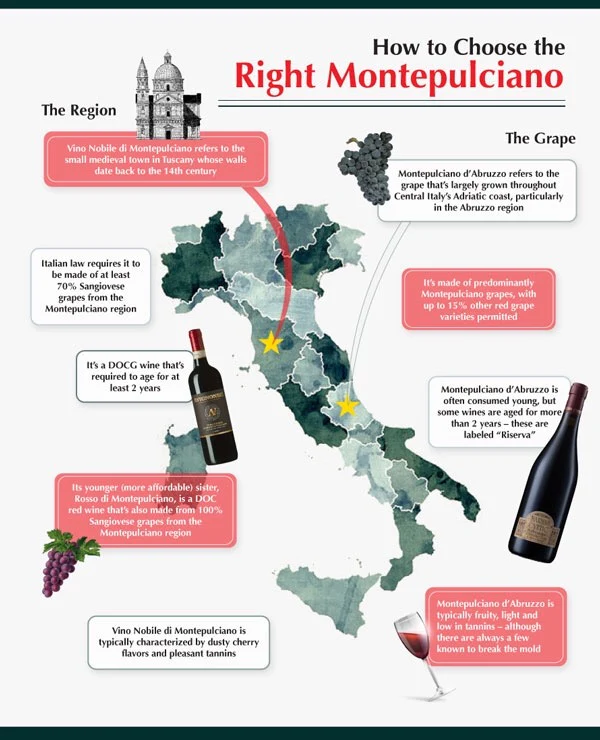
👉 Vino Nobile di Montepulciano ≠ Montepulciano d’Abruzzo
Two completely different wines.
-
Vino Nobile di Montepulciano
→ made in Tuscany
→ mainly from Sangiovese (locally called Prugnolo Gentile) -
Montepulciano d’Abruzzo
→ made in Abruzzo
→ from the Montepulciano grape
Same name. Different world.
And yes… we’re very happy to have Sangiovese on our side 😏
What makes Vino Nobile so special?
Like many great Tuscan wines, Vino Nobile is built around Sangiovese.
By law:
- minimum 70% Sangiovese
In the glass, you’ll find:
- vibrant acidity
- dusty cherry
- floral elegance
- firm, noble tannins
It’s a wine that doesn’t scream.
It speaks.
And when paired with food… it becomes something else entirely.
The “family” of Vino Nobile
Think of it like this:
Rosso di Montepulciano → the younger brother
- aged ~12 months
- fresher, more floral, more immediate
Vino Nobile di Montepulciano → the core expression
- aged minimum 2 years
Vino Nobile Riserva → the older, wiser brother
- aged minimum 3 years
- deeper, more complex, more structured
A story that goes back 2500 years
Wine in Montepulciano is not a trend.
It’s history.
- already made by the Etruscans
- loved in the Roman era
- celebrated during the Renaissance
Poets wrote about it. Nobles drank it.
Which brings us to the name:
“Nobile” = Noble
The modern name was formalized in 1925 by Adamo Fanetti, one of the key figures in bringing this wine to the world stage.
But the soul of the wine?
That’s ancient.
Old school vs new school
Traditionally, Vino Nobile was:
- Sangiovese (Prugnolo Gentile)
blended with local grapes:
- Canaiolo (floral)
- Colorino (color & structure)
- Mammolo (spice)
- aged in large oak barrels (botti)
Result:
- elegance
- freshness
- terroir-driven expression
Then came the 90s.
Some producers decided to experiment:
- introduction of Merlot & Cabernet
- use of small French barriques
- more structure, more power, more oak
Two philosophies.
Two styles.
Same territory.
What about Montepulciano d’Abruzzo?
Let’s give credit where it’s due.
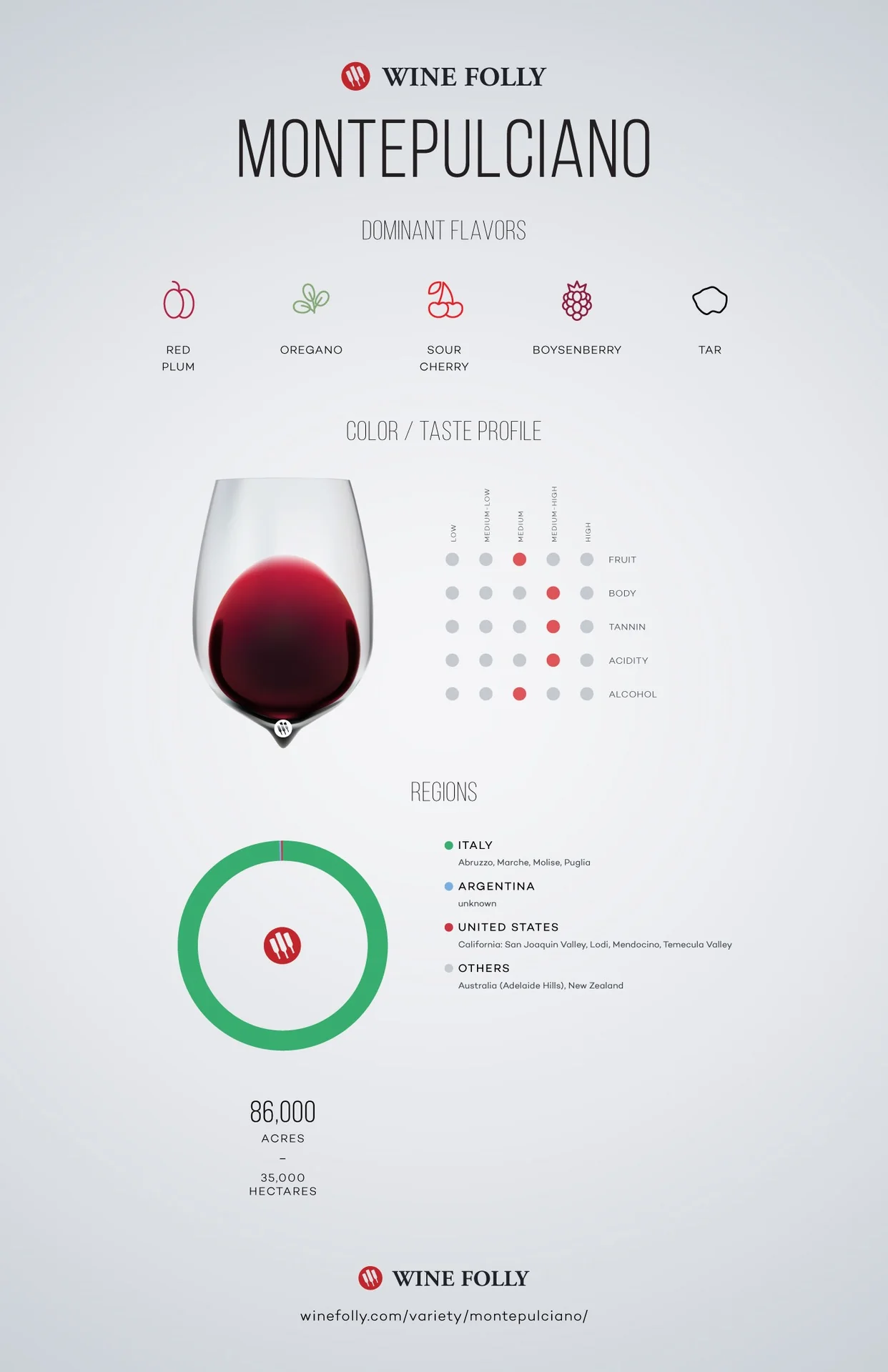
Montepulciano d’Abruzzo can be:
- juicy
- fruit-forward
- vibrant
- extremely enjoyable
And yes, sometimes very serious too—especially from producers like:
- Valentini
- Masciarelli
- Emidio Pepe
But generally speaking:
- more immediate
- less tannin-driven
- less complex than Vino Nobile
- Cheaper(av price 10$)
Different style. Different identity.
A small town, a big wine world
Montepulciano is not a big place.
And yet:
👉 around 90 wineries
Most of them:
- family-run
- small production
- deeply connected to the land
This is not industrial wine.
This is heritage.
Passed from generation to generation.
Final thought
Vino Nobile di Montepulciano is not just a wine.
It’s:
- history
- identity
- elegance
- and a quiet kind of power
The kind that doesn’t need to shout to be heard.